- EN
- UA
- RU
25 May, 2026 | 17:30
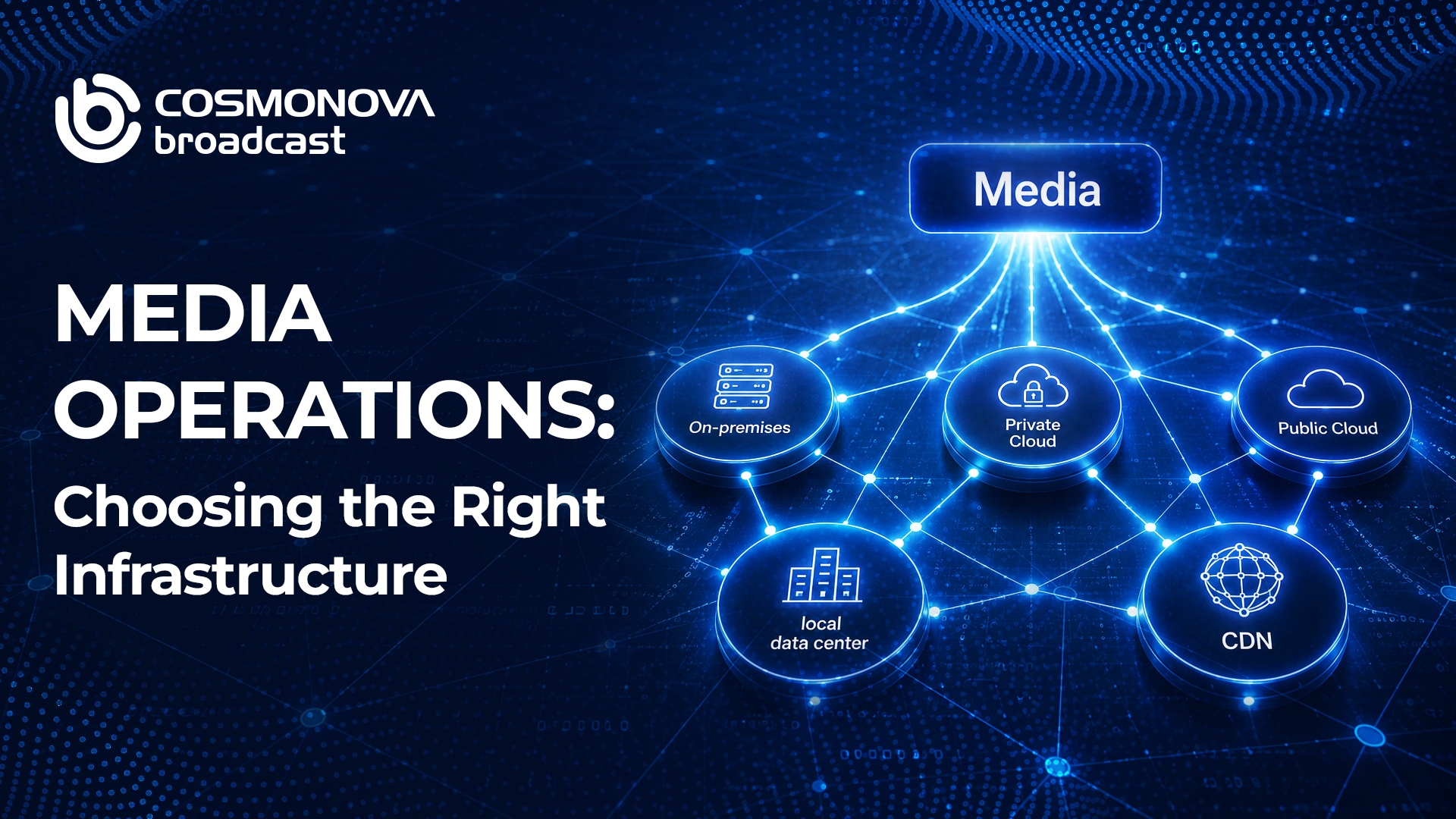
Different media workflows place different demands on infrastructure. Playout, live streaming, OTT delivery, channel distribution, testing environments, temporary scaling, and archive operations all have different load profiles, risk levels, continuity requirements, and cost logic.
That is why there is no single infrastructure model that works equally well for every media operation.
On-premises infrastructure gives media companies full control over equipment, access, and configuration. It can be suitable for specific internal workflows, strict security requirements, or legacy operational models. However, it usually requires significant upfront investment, ongoing maintenance, internal engineering resources, and long-term responsibility for redundancy, resilience, and upgrades.
Public cloud is useful for fast launches, test environments, variable workloads, temporary traffic peaks, and geographic expansion. It offers flexibility and speed without major upfront investment. At the same time, costs can become less predictable because of outbound traffic, storage, processing, data movement, and regional cloud charges.
Private cloud is often better suited for continuous media operations that require controlled performance, SLA-based responsibility, and predictable capacity. It works well when an experienced engineering and NOC team actively manage the infrastructure.
Hybrid infrastructure can combine control and flexibility by keeping critical operations in a managed environment while using public cloud for selected workloads. This model can be effective when integration, workflows, monitoring, and responsibility boundaries are clearly defined.
The infrastructure decision is operational as much as technical.
Media companies need channels to launch on time, signals to be delivered reliably, OTT platforms to remain available, live streams to handle peak loads, and technical incidents to be monitored before they affect the audience.
The right architecture should match the workload profile, security requirements, continuity needs, and responsibility model of each media operation.
Where Cosmonova Broadcast fits
Cosmonova Broadcast provides managed media services on its own geo-distributed infrastructure with EU redundancy.
Our environment is built for continuous broadcast, streaming, OTT, and channel distribution operations that require monitoring, resilience, and clear accountability.
We support media companies with playout, IP delivery, OTT deployment, live streaming, localization, archiving, compliance logging, 24/7 NOC monitoring, and SLA-based responsibility with 99.98% availability.
Through ASP, our All Services Platform, these services are integrated within a single managed environment. Clients can choose the operations they need, control service costs, and scale without having to rebuild infrastructure from scratch.
In this model, one provider is responsible for the availability of the infrastructure, services, and selected media operations.
Infrastructure is not the goal. Continuous operations are.
Strong media infrastructure enables stable operations, reliable delivery, controlled risk, and scalable growth without operational disruption.
Cosmonova Broadcast helps media teams focus on content, audiences, and market expansion while we manage the technical foundation behind their operations.
A summary of Cosmonova Broadcast’s operational scale, infrastructure upgrades, and key milestones across playout, IP distribution, OTT, and streaming in 2025
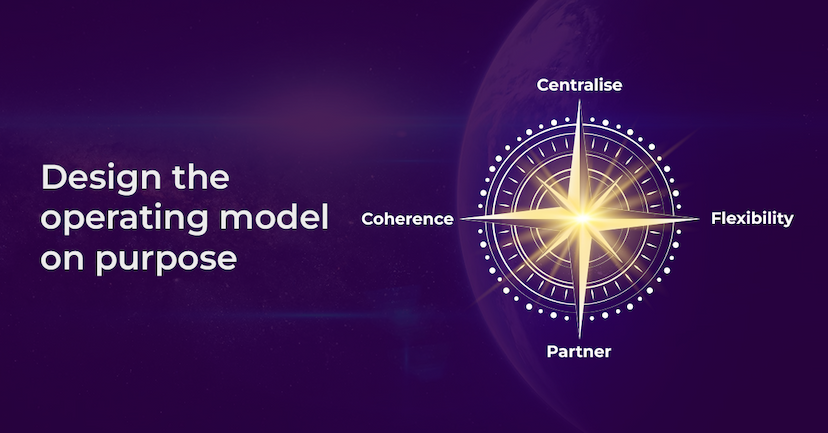
The key is not choosing between partnership or centralisation, but designing an operating model that fits your goals

A service-level agreement guarantees a commitment, but operational stability in media workflows depends on structured responsibilities, escalation paths, continuous monitoring, and incident management
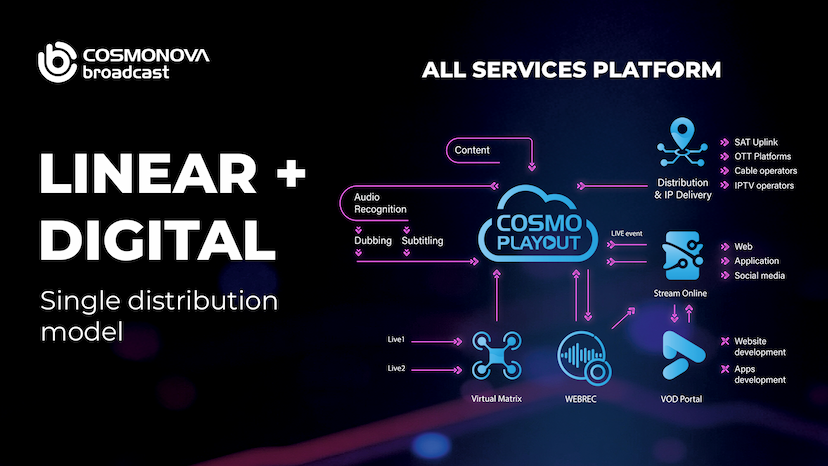
The distinction between linear TV and digital platforms is fading as audiences consume content across multiple environments. Coordinated multiplatform distribution is becoming essential for broadcasters
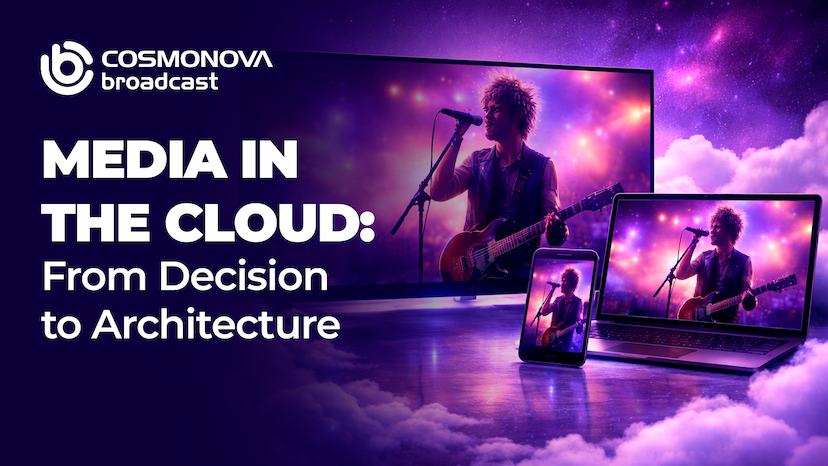
Cloud adoption is no longer the main question for media companies. The key challenge today is architecture. Learn how integrated cloud infrastructure improves operational stability, scalability, security, playout, and IP distribution for broadcasters and OTT services
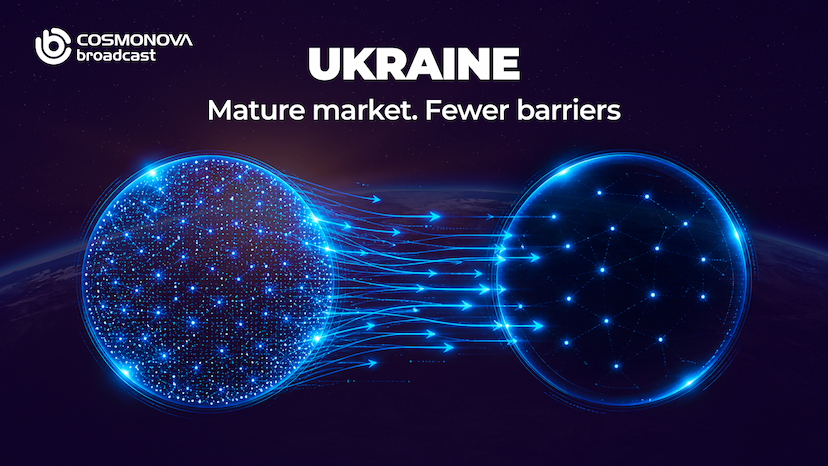
Ukraine offers simplified market entry for EU linear broadcasters. Cosmonova Broadcast acts as an operational entry point, providing the full media supply chain - from channel deployment and localization to distribution and multiplatform IP delivery
.png&w=828&q=75 "Always-On Media Keeps Revenue Flowing - Photo")
Technology can be replaced. Features can be copied. But the operating model behind them is what creates measurable advantage

One TV channel delivery request evolved into an integrated media operations project covering multiplatform distribution, managed playout, FAST, VOD, OTT, and live streaming